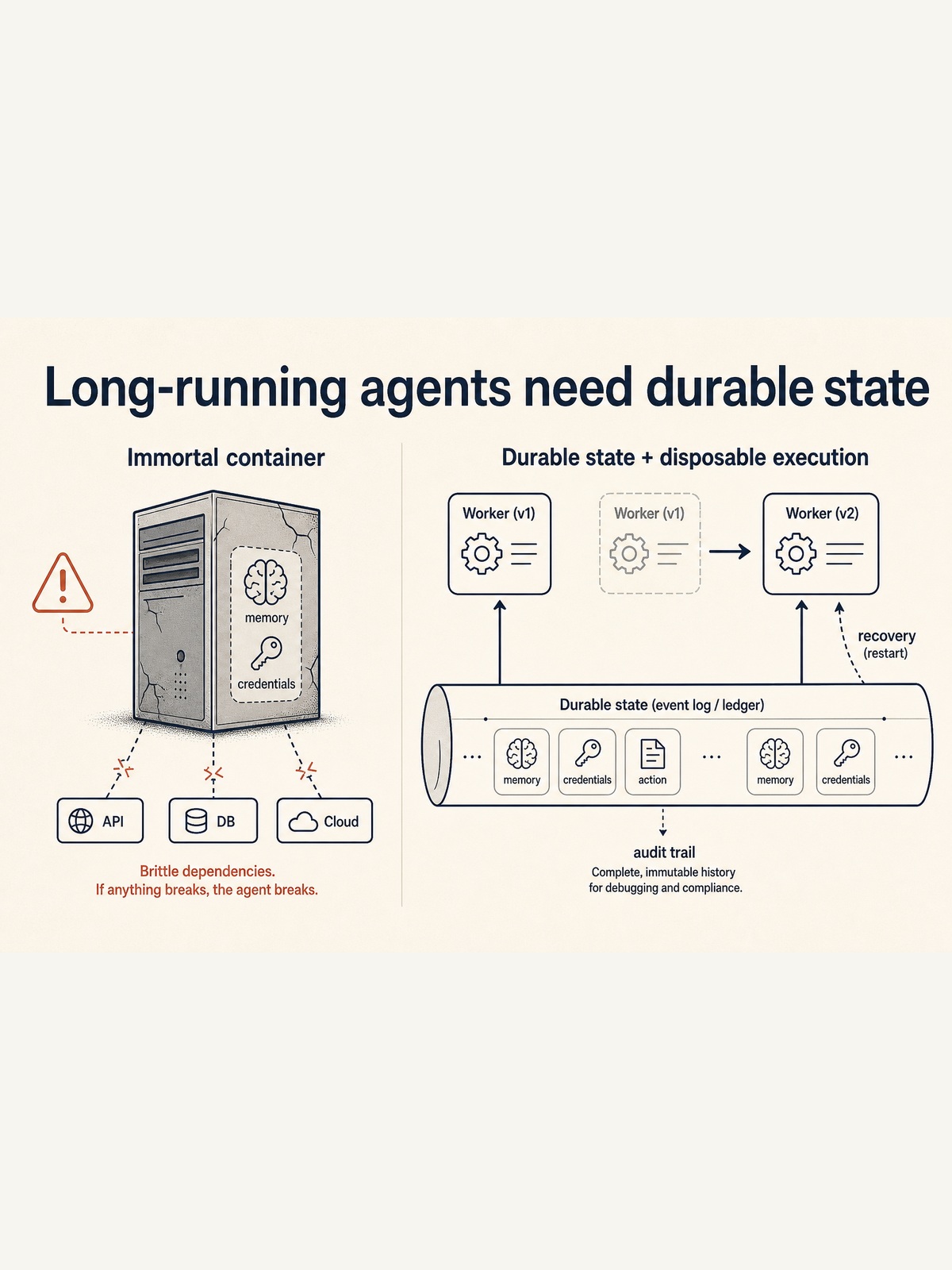
The visible intelligence of an AI agent comes from a model. Its reliable usefulness comes from everything around the model. That surrounding system—context assembly, tool contracts, permissions, execution environments, state, verification, recovery, and evaluation—is the harness. Harness engineering is the discipline of designing it deliberately.
This distinction matters because a capable model can still fail as an agent in mundane ways: it can receive the wrong slice of a repository, call a tool with an ambiguous contract, lose the thread after a long task, mistake an unverified change for a completed one, or operate with permissions that are too broad. None of those failures is fixed simply by asking for a stronger model.
What a harness actually does
A harness turns a sequence of model completions into a bounded, observable process that can act in a real environment. At minimum, it decides what the agent can see, what actions it may take, how tool results are represented, when progress is checked, what persists between steps, and how the run stops or recovers.
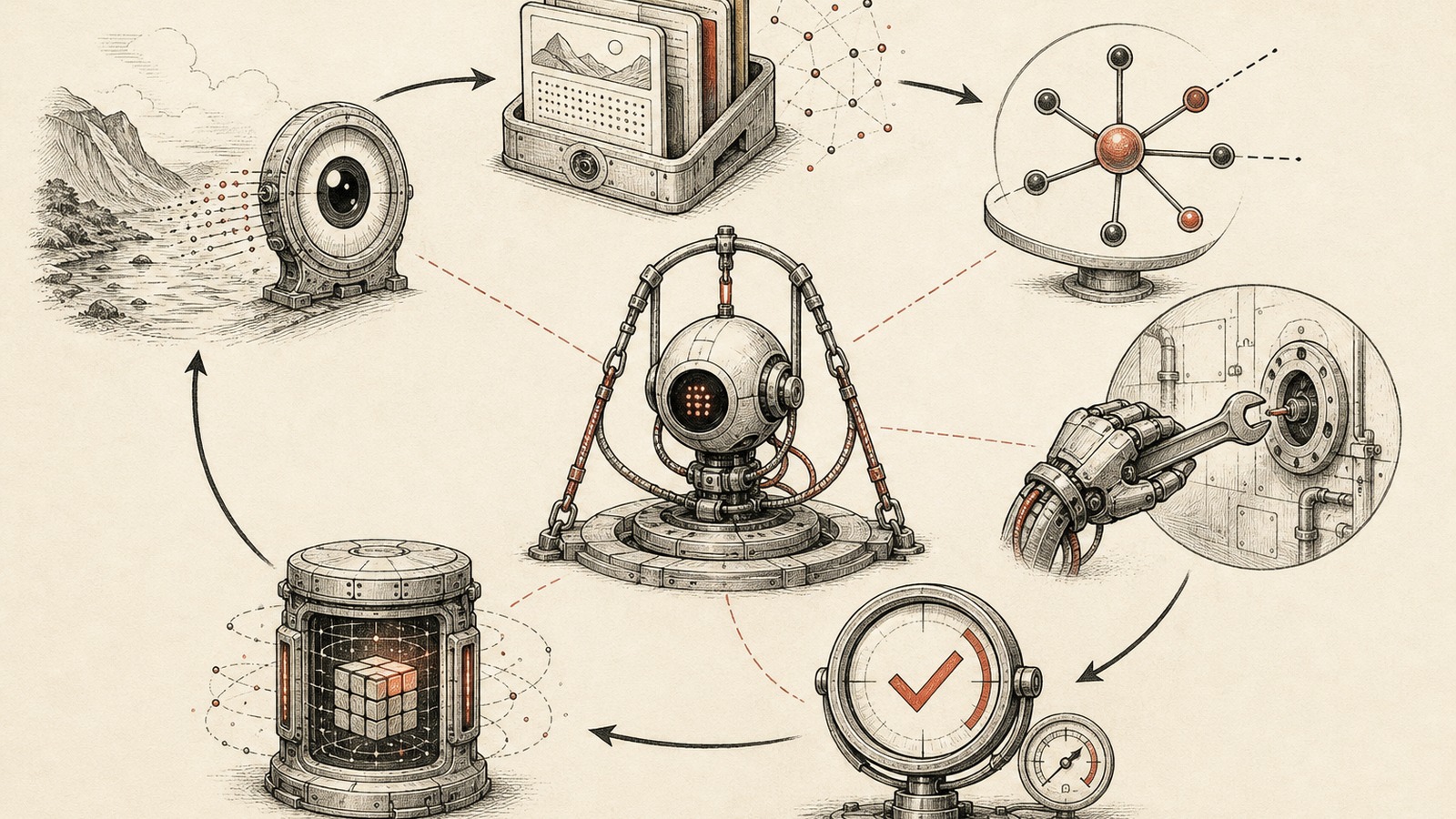
- Context engineering: select and compress the task, codebase state, policies, prior decisions, and relevant tool output so the model receives a useful working set rather than a transcript dump.
- Tool and environment design: expose files, terminals, browsers, APIs, and sandboxes through stable contracts; make effects legible and failures actionable.
- Control logic: choose the agent loop, budgets, handoffs, subagent topology, approval boundaries, retries, and stopping conditions.
- Verification: distinguish “a command ran” from “the requested outcome is true” using tests, diffs, screenshots, linting, assertions, and explicit read-backs.
- Memory and observability: retain durable project knowledge while recording traces that make failures diagnosable and improvements measurable.
A useful framing is that the model supplies local reasoning while the harness supplies operational reliability. The model proposes; the harness constrains, instruments, and checks.
Why this is engineering—not prompt decoration
Prompts are part of the interface, but they are only one layer. Production agents need explicit state transitions, typed inputs and outputs, resource limits, isolation, and testable invariants. If an agent edits a production configuration, the important question is not whether its prose sounded confident. It is whether the intended file changed, the validation command passed, the diff was reviewed, and the change remained within its authority.
OpenAI’s harness-engineering discussion makes a related organizational point: as agents take on larger parts of the software lifecycle, the practical leverage lies in the surrounding workflow—how tasks are scoped, reviewed, and fed back into future runs—not solely in model selection.[1] Teams should therefore treat their harness as a product with an architecture, telemetry, regression tests, and an improvement cadence.
The control loop to design
| Stage | Harness question | Good default |
|---|---|---|
| Observe | What is true right now? | Read authoritative state; do not trust a stale summary. |
| Orient | What context is necessary? | Load the smallest relevant task, policies, and artifacts. |
| Act | Which tool call is allowed? | Use narrow, typed tools with clear error returns. |
| Verify | What proves success? | Read back state and run task-specific checks. |
| Learn | What should persist? | Store concise, durable knowledge; log the rest as a trace. |
This loop is more than a diagram. It is a debugging method. When a run goes wrong, locate the failing stage before changing the model or adding a generic instruction. Many apparent reasoning failures are actually observation failures, poor tool ergonomics, missing guardrails, or weak verification.
Open harnesses: Pi and DeepSeek Harness
Open-source harnesses make the control plane inspectable and composable. That changes the kind of engineering a team can do: it can trace a surprising behavior to a tool wrapper or system prompt, replace a component, add a domain-specific evaluator, and share the result without waiting for a vendor roadmap.
Pi: deliberately small, extensible by design
Pi describes itself as a minimal terminal coding harness intended to be adapted rather than forked. Its documented extension surface includes TypeScript extensions, skills, prompt templates, themes, packages, interactive and non-interactive modes, RPC, and an SDK; it intentionally leaves some higher-level patterns, such as subagents and plan mode, to users or packages.[2] That is a design philosophy: keep the core legible, then let teams assemble the workflow that fits their environment.
The strength of this approach is control. A research lab can build an evaluator around a specialized simulator; a platform team can wrap privileged actions in its own policy checks; an individual engineer can keep a fast local loop. The cost is that the team owns more integration, security review, and maintenance. Minimality is not the same as completeness—it is a choice about where responsibility lives.
DeepSeek Harness: composition as the primary abstraction
DeepSeek Harness makes the opposite end of the open design spectrum explicit: “everything is a plugin.” Its developer-preview materials describe models, tools, skills, sessions, sandboxes, storage, loops, scheduling, and the UI as swappable or recomposable capabilities; it is published as open-source MIT-licensed infrastructure.[3] This turns the harness itself into a modular systems platform rather than merely a coding CLI.
That breadth is attractive when the agent must span long-running tasks, multiple surfaces, or different deployment boundaries. It also raises the bar for interface discipline. If every capability is replaceable, the contracts between capabilities must be exceptionally clear: data shape, lifecycle, isolation guarantees, failure semantics, and trace compatibility become first-class design objects.
Integrated harnesses: Codex and Claude Code
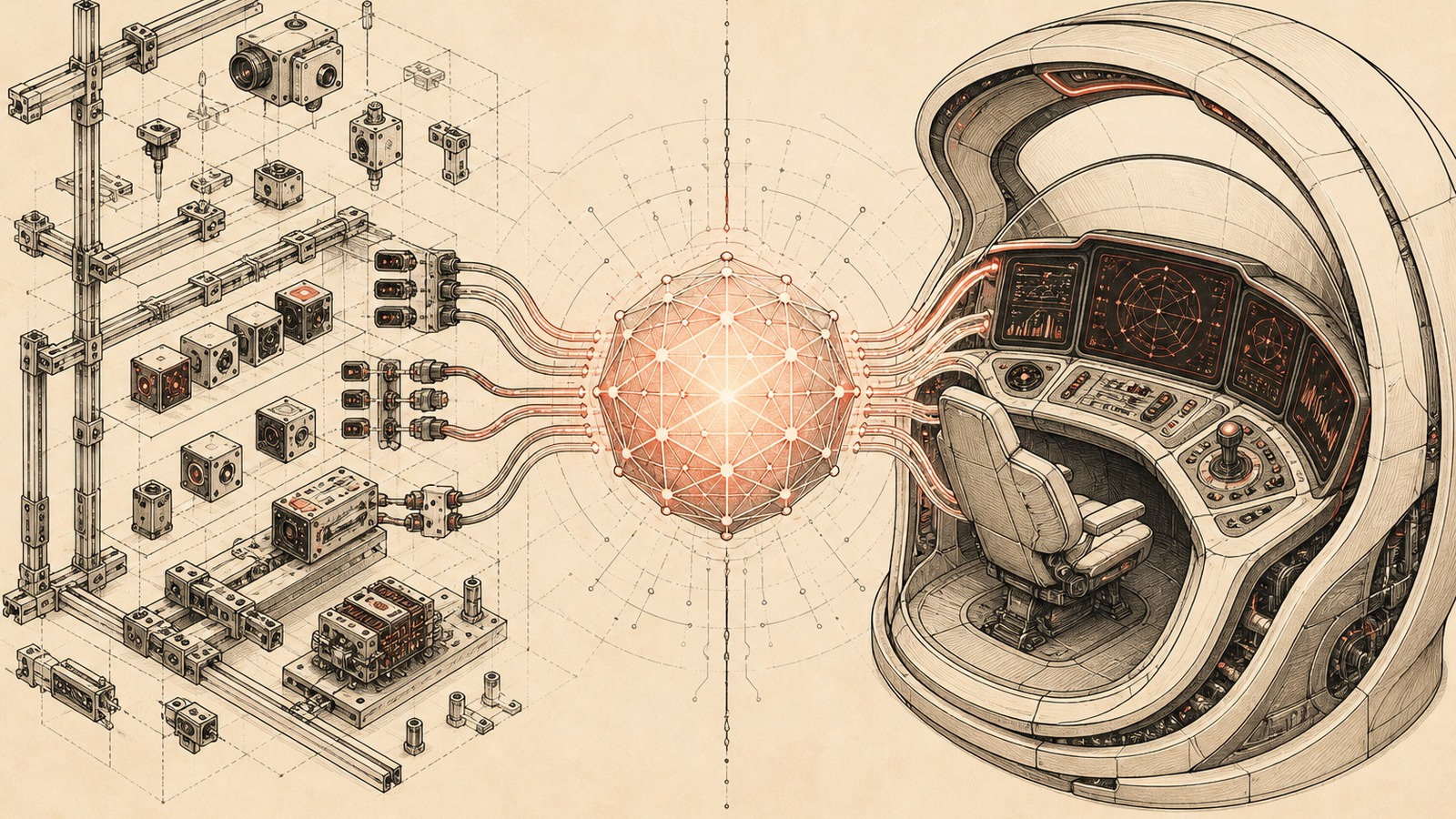
Integrated products optimize a different dimension: reducing the distance between an agent’s reasoning and the working environment. They package model access, user experience, approvals, sandboxing, context management, and workflow conventions into a coherent product surface. The benefit is a faster path to dependable everyday use; the trade-off is less freedom to inspect or replace every layer.
Codex: a moving boundary between platform and product
It is increasingly inaccurate to place Codex cleanly in a “closed harness” bucket. OpenAI’s current developer materials describe Codex as an open agent harness, with the app, CLI, and IDE extension demonstrating capabilities that developers can inspect, integrate, and adapt.[5] The more useful distinction is therefore not a binary open/closed label, but which parts of the stack are inspectable, self-hostable, policy-configurable, and operationally owned by the user.
Codex is still instructive as an integrated harness: its value comes from an opinionated end-to-end experience—project context, tools, permissions, workspaces, task modes, and interfaces that make advanced agent behavior usable without every team recreating the plumbing. For organizations, the engineering question is where to accept those defaults and where to place independent controls, especially around identity, secrets, network access, and release gates.
Claude Code: workflows, instructions, and hooks
Claude Code illustrates the integrated-workflow approach. Anthropic documents it as an agentic coding tool that can read a codebase, edit files, run commands, and integrate with development tools across terminal, IDE, desktop, and browser contexts.[4] Its customization layers include project instructions through CLAUDE.md, reusable skills, hooks, persistent memory, and MCP connections to external systems.[4] Those features are harness capabilities: they make an agent more useful by shaping context, affordances, and control around the model.
For a team, the important question is not whether an integrated harness is “less technical” than an open one. It is whether its extension points are sufficient for the team’s real constraints. Can it encode the review checklist? Can it restrict sensitive tools? Can it make verification mandatory? Can it capture evidence when it changes an external system? If yes, integration can be an advantage; if not, a lower-level or more open harness may be the better foundation.
A practical selection framework
- Choose a lean open harness when differentiation lies in your workflow, tools, evaluation stack, or deployment environment—and you are prepared to own those layers.
- Choose a modular platform when you need multiple execution surfaces or teams to compose capabilities independently, and can invest in contracts and governance.
- Choose an integrated harness when speed of adoption, polished UX, and strong defaults matter more than replacing every subsystem.
- In every case, retain independent verification for consequential actions. A harness may execute an action; your engineering process must still establish whether it achieved the intended state.
The real moat is the improvement loop
The most durable advantage will not be a clever wrapper around a frontier model. It will be a disciplined improvement loop: capture traces, classify failures, change one harness variable, evaluate against representative tasks, and keep the change only when it improves the outcome. That loop converts agent use from a sequence of anecdotes into an engineering system.
Harness engineering is therefore the work of making intelligence accountable to an environment. Models will improve quickly. The organizations that benefit most will be those that can give those models the right context, the right tools, the right boundaries, and—most importantly—the right definition of done.
Sources and further reading
[1] OpenAI — Harness engineering: leveraging Codex in an agent-first world
[3] DeepSeek — Harness developer preview: Everything is a plugin
[4] Anthropic — Claude Code overview
[5] OpenAI Developers — Codex as a platform: build on the open agent harness
Tags